Choosing the right flooring when you have pets means thinking about more than just looks. Scratch resistance, moisture protection, and day-to-day comfort all play a role in finding a floor that works for your whole household. Here's what to know before you start.
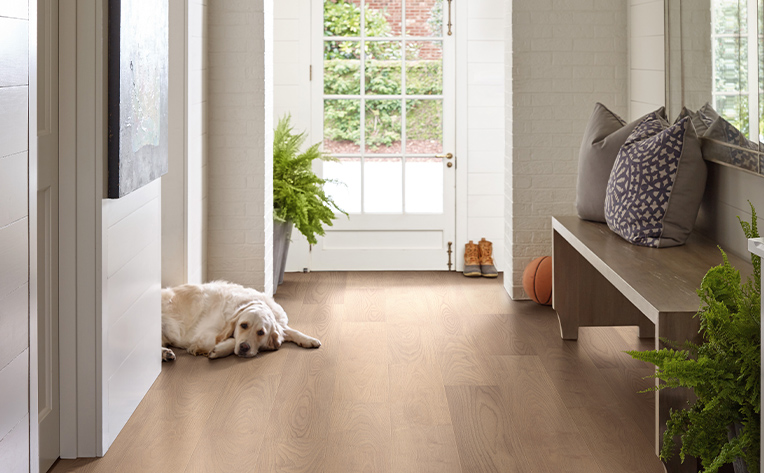
Choosing the right flooring when you have pets means thinking about more than just looks. Scratch resistance, moisture protection, and day-to-day comfort all play a role in finding a floor that works for your whole household. As your friendly flooring experts, we're here to help you find the best fit for your home and your pets. Read on to explore the most common options and how they hold up to life with dogs.
Not all floors are created equal when dogs are in the picture. Here's how the most common flooring types stack up.
Porcelain tile is one of the hardest and most durable flooring options available, and it's a breeze to clean up after accidents. That makes it a natural fit for pet owners who prioritize low maintenance. The tradeoff is comfort. Tile offers little to no grip, which can make it slippery for dogs, and the hard surface can be tough on aging joints. If you have a senior dog or a breed prone to hip and joint issues, tile may not be the most comfortable day-to-day choice.
LVP is one of the most well-rounded options for pet owners. It's waterproof, easy to clean, and warmer and softer underfoot than tile, which makes it more comfortable for dogs of all ages. A thicker wear layer gives it better long-term resistance against scratches from nails, and it holds up well in high-traffic areas. The one thing to keep in mind: LVP cannot be refinished, so the wear layer thickness you choose at purchase is what you're working with for the life of the floor.
Laminate is durable and holds up well against light scratching, making it a solid choice in lower-moisture areas of the home. The catch for pet owners is moisture. Laminate is not waterproof, and prolonged exposure to pet accidents can cause swelling, warping, or damage over time. If accidents are a regular reality in your home, laminate is better suited to rooms where pets spend less time.
Engineered hardwood gives you the warmth and look of real wood with a bit more stability than solid hardwood in everyday conditions. It handles moderate moisture better and can be a good middle ground for households that want wood aesthetics without going fully synthetic. That said, larger dogs with longer nails can still leave scratches over time, and refinishing potential depends on how thick the veneer is. It's a great option for calmer or smaller pets, but may show wear faster in more active households. Learn more in our engineered hardwood guide.
Solid hardwood is a beautiful, timeless choice, and the ability to refinish it multiple times is a real long-term advantage. For pet owners, though, it requires the most upkeep. It's more susceptible to scratches and moisture damage than any other option on this list, and accidents that aren't cleaned up quickly can stain or warp the wood. Solid hardwood works best in homes with smaller, less active pets and owners who are diligent about maintenance.
Not sure how a new floor will look in your space? Try our Room Visualizer tool to see different flooring options in your actual room before you commit. Simply upload a photo and explore styles at your own pace, so you can shop with confidence before you ever set foot in a store.
The right floor depends on the size, breed, and habits of your dog as much as it does your personal style.
Big dogs need floors that can keep up. Porcelain tile and LVP with a thick wear layer are the most practical choices for large breeds, offering the durability and moisture resistance needed to handle heavier use. Tile is easy to clean and nearly scratch-proof, while LVP adds a warmer, more comfortable feel underfoot. Whatever you choose, look for a wear layer of 20 mil or more to get the most out of your floor long-term.
Smaller dogs are generally easier on floors, which opens up more options. Engineered hardwood is a great fit if you love the look of real wood, and LVP works well in any room where moisture or accidents might be a concern. For older or smaller dogs with joint sensitivity, a softer feel underfoot matters too. LVP and engineered hardwood both offer more comfort than tile, which can be a real consideration for dogs that spend a lot of time on the floor.
Dogs that run, skid, and play hard indoors need a floor that can handle the action without showing every scuff. LVP with a thick wear layer and porcelain tile are both strong choices here. Tile is nearly indestructible and easy to wipe down, while LVP absorbs a bit more impact and stays warmer in colder months. Area rugs in play areas are a smart addition regardless of the floor type, giving your dog better traction and reducing surface wear in the spots that take the most abuse. See our dog-friendly flooring guide for more tips on protecting high-traffic zones.
Older dogs need floors that support their comfort and mobility, not just your cleaning routine. Smooth, hard surfaces like tile can be slippery and hard on aging joints, so traction becomes a real priority. LVP offers a slightly softer, warmer feel than tile and tends to provide a bit more grip. Area rugs and runners in key spots add another layer of cushioning and stability. For senior pets, the comfort and safety of the floor matters just as much as how easy it is to maintain.
Yes, dog nails can scratch hardwood floors, especially if they are not trimmed frequently or properly. Over time, the repeated contact of nails with the floor can cause visible scratches and wear. Regular trimming of your dog's nails and using rugs or mats in high-traffic areas can help minimize scratching.
Yes, pet urine can damage hardwood floors if left untreated. The acidity and moisture in urine can penetrate the wood, causing discoloration, odor, and even warping or buckling of the floorboards. It's crucial to clean up pet accidents promptly and thoroughly to prevent lasting damage.
When choosing a floor cleaner for homes with pets, look for products labeled as pet-safe or pet-friendly. These cleaners are typically formulated with non-toxic ingredients that are safe for pets and won't leave harmful residues on your floors. Additionally, check the product label for any warnings or precautions regarding pets.
The best flooring for dogs is one that is durable, scratch-resistant, and easy to clean. Some options to consider include:
When it comes to pet-friendly flooring, durability and water resistance are the two biggest factors. Porcelain tile is one of the hardest flooring options available and holds up well against scratches, moisture, and heavy use, though it can feel cold and hard underfoot, which is worth considering for older pets or dogs that spend a lot of time on the floor. Luxury vinyl plank is another strong choice, offering waterproof performance, a warmer and more comfortable feel underfoot, and solid resistance to everyday pet activity.
Both are popular choices for pet owners, but they perform a little differently. Luxury vinyl plank handles moisture better than laminate, making it a practical option in areas where accidents are more likely. Laminate has come a long way in terms of durability, but prolonged exposure to moisture can cause issues over time unless you choose a waterproof option. For homes with dogs, LVP tends to be the more forgiving option day to day.
In most cases, no, as long as accidents are cleaned up promptly. The surface of vinyl plank flooring is waterproof, meaning urine won't soak into the plank itself the way it would with hardwood or laminate. The weak point is the seams. If urine pools at the joints between planks and sits for an extended period, it can wick down into the underlayment or subfloor beneath, leading to lingering odors or moisture damage below the surface. When cleaning up, blot rather than rub to avoid pushing liquid further into the seams, and use a pH-neutral cleaner or an enzymatic pet cleaner to fully break down the uric acid. Avoid ammonia-based cleaners, which can actually encourage pets to return to the same spot. Cleaned up quickly and consistently, vinyl plank flooring is one of the most forgiving options for pet owners.
There's no single answer, since it depends on your dog's size and activity level, your household needs, and your style preferences. Porcelain tile and luxury vinyl plank are two of the most practical options for pet owners. Both hold up well against moisture and everyday wear. If comfort underfoot matters, LVP offers a warmer, more comfortable feel than tile. Area rugs in high-traffic spots can also help protect any floor from extra wear.
It depends on the product. Most luxury vinyl plank flooring has a wear layer designed to resist light scratching, but larger dogs with longer nails can leave marks over time, especially on thinner wear layers. Keeping your dog's nails trimmed regularly is one of the best ways to protect your floors, regardless of the flooring type.
No flooring is truly indestructible, but some options come close in terms of everyday resilience. Porcelain tile is one of the hardest and most scratch-resistant flooring materials available. For a softer feel without sacrificing durability, luxury vinyl plank with a thick wear layer is a strong contender. The right choice really comes down to how your household uses the space.
Porcelain tile is naturally resistant to scratches and one of the most durable options for pet owners. Laminate flooring also performs well against light scratching, and luxury vinyl plank with a thicker wear layer is another strong choice, though no floor is completely scratch-proof. Regular nail trims, felt pads on furniture, and area rugs in busy areas all help extend the life of your floors no matter what material you choose.
